If you think a traditional Indian lunch is just a single curry with some rice or naan, you're missing the beautiful, chaotic, and deeply satisfying symphony of a real Indian meal. It's not a dish; it's an experience. At its heart, especially across much of India, lies the thali – a round platter holding an array of small bowls, each with a distinct purpose, flavor, and texture. This isn't fast food. It's a balanced, nutrient-dense, and often leisurely affair that engages all your senses. Let's break it down, beyond the clichés.
Your Quick Guide to Indian Lunch
The Heart of the Meal: Understanding the Indian Thali
The thali is the ultimate expression of an Indian lunch. The word literally means "plate," but it refers to the complete meal served on it. A well-composed thali is a lesson in nutrition and flavor balancing—carbohydrates, proteins, vitamins, and all six tastes recognized in Ayurveda (sweet, sour, salty, bitter, pungent, astringent) find a place.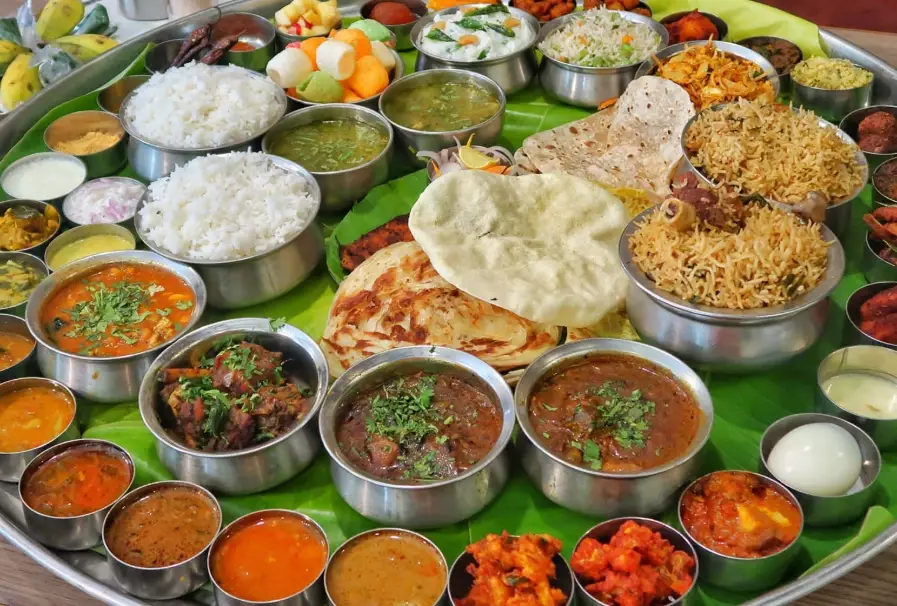
Here’s what you’ll typically find on a classic vegetarian thali:
| Component | What It Is | Purpose & Examples |
|---|---|---|
| Main Staples (1-2) | The base carbs. | Rice: Plain steamed basmati or a local variety. Bread: Roti (whole wheat flatbread), chapati, paratha (layered and often pan-fried), puri (deep-fried puffed bread). Often both rice and bread are served. |
| Vegetable Dishes (2-3) | The main flavor carriers. | A dry stir-fry (sabzi) like aloo gobi (potato cauliflower) and a wetter curry (shorba) like palak paneer (spinach with cottage cheese). One might be more spicy than the other. |
| Dal or Lentil Curry (1) | The protein-packed comfort. | A soupy or thick preparation of lentils, like yellow dal tadka (tempered with spices) or sambar (a tangy lentil stew with vegetables, common in South India). |
| Accompaniments (3-4) | Essential flavor enhancers. | Raita: Yogurt with cucumber, boondi, or other veggies to cool the palate. Chutney: A condiment, like mint-coriander or tamarind-date. Pickle (Achar): Intensely spiced and fermented fruits/vegetables (mango, lime). A small salad (kachumber) of onions, tomato, cucumber. |
| Dessert (1) | A sweet finish. | A small portion, like a spoonful of kheer (rice pudding), gulab jamun, or shrikhand (strained yogurt dessert). |
I remember my first proper thali in Jaipur. The server kept coming around with unlimited refills of everything until I literally had to wave him off. It felt less like a meal and more like a generous, overwhelming act of hospitality. That's part of the point.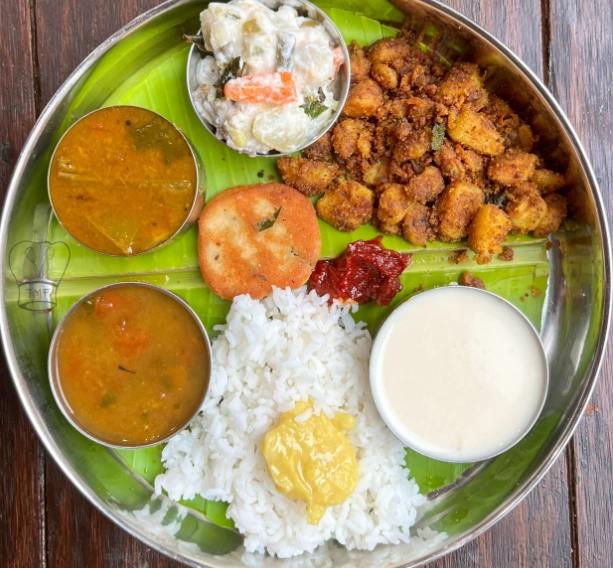
Beyond the Plate: Key Elements of a Traditional Indian Lunch
The components are one thing, but the philosophy behind the meal is what makes it traditional.
Timing and Importance
Lunch is often the main, heaviest meal of the day in India, typically eaten between 1 PM and 3 PM. The logic is sound: you fuel up for the rest of the day's work and have plenty of time to digest. Dinner is usually lighter. This is a crucial detail many miss—the same rich butter chicken you might eat for dinner abroad is often a lunch dish in its homeland.
Freshness is Non-Negotiable
With notable exceptions like certain dals that taste better the next day, a traditional lunch is cooked fresh that morning. The idea of reheating yesterday's curry for a main meal feels wrong in this context. The vibrancy of freshly tempered spices and just-cooked vegetables is irreplaceable.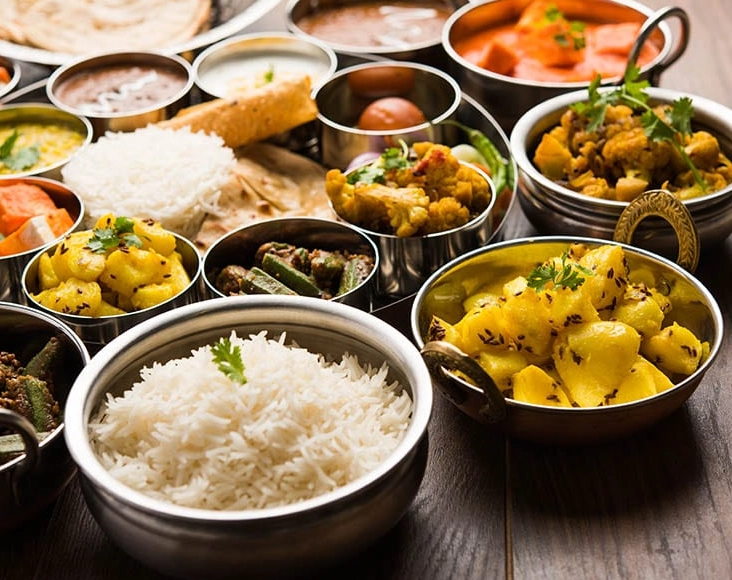
The Spice Matrix, Not Just Heat
This is where beginners get tripped up. "Spicy" doesn't just mean capsaicin heat from chilies. It's about a blend of whole and ground spices—cumin, coriander, turmeric, mustard seeds, asafoetida—toasted or fried in oil to release their essential oils. This process, called *tadka* or *chaunk*, is the soul of flavor. A dish can be incredibly flavorful and aromatic without being mouth-on-fire hot.
A common mistake? Neglecting the supporting cast. People focus on the curries but ignore the raita, pickle, and chutney. Big error. A bite of rich curry followed by a tiny bit of tangy pickle or a spoonful of cooling raita isn't just tasty; it's digestive alchemy. They reset your palate and aid digestion in a way Western condiments rarely do.
The Role of Yogurt and Buttermilk
Dairy is the cooling counterbalance. Raita on the plate is just the start. It's very common to end the meal or have alongside it a glass of *chaas*—a thin, lightly spiced buttermilk with cumin and mint. It's the ultimate digestive and cooling agent, especially in summer.
How to Eat a Traditional Indian Lunch (Etiquette and Tips)
You can eat it with a fork and spoon, but to truly experience it, you use your hands. Specifically, your right hand.
The left hand is considered unclean. It takes practice. The goal isn't to get messy (though it's okay if you do), but to mix and feel the food. You might tear a piece of roti to scoop up some vegetable curry and dal, then use your fingertips to mix a bit of rice with dal and pop it in your mouth. The tactile connection is part of the enjoyment—you feel the temperature and texture directly.
Here's a pro tip: Use your fingertips and the first segment of your fingers, not your whole palm. Mix only what you're about to eat in that moment on your plate, not the entire serving at once. And have a bowl of warm water with lemon (often provided) to clean your hands before and after.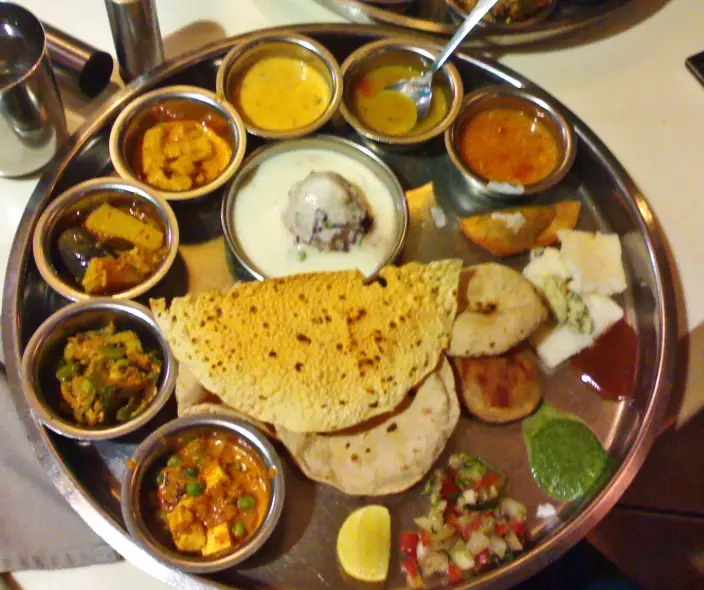
If you're in a restaurant and see locals eating with hands, give it a try. It feels awkward for the first two minutes, then surprisingly natural. If you're uncomfortable, cutlery is absolutely fine. No one will judge a visitor.
Exploring Regional Variations Across India
Calling it "Indian lunch" is like calling European food "European food." The thali format is a framework, but the contents change dramatically every few hundred miles.
North Indian Lunch: Wheat country. You'll get multiple types of bread (roti, paratha) as the main staple, with rice playing a smaller role. Gravies are often richer, using cream, cashews, or tomatoes (think butter chicken, paneer makhani). Dals are thick and hearty. A staple like *rajma chawal* (kidney beans with rice) is a classic North Indian comfort lunch.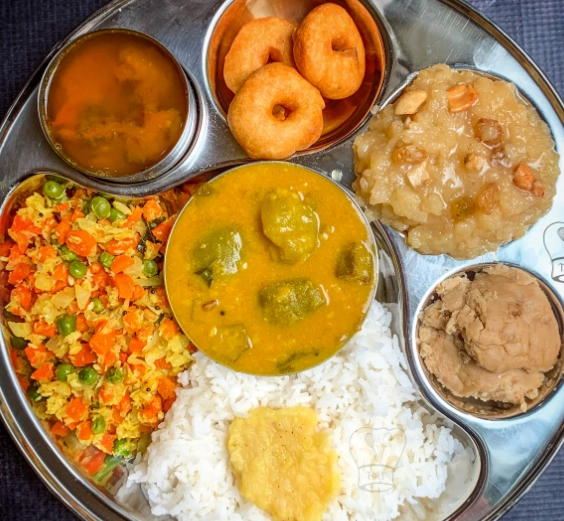
South Indian Lunch: Rice is king, often served on a banana leaf, which imparts a subtle aroma. The meal includes a wider array of wet dishes to mix with the rice: sambar, rasam (a peppery, clear soup), at least two vegetable curries (poriyal), and a thick yogurt called *mor Kuzhambu*. Buttermilk is a must-finish. The flavors rely heavily on coconut, curry leaves, mustard seeds, and tamarind.
Gujarati Thali: Famously vegetarian and subtly sweet. Even the dal and kadhi (a yogurt-based curry) might have a hint of jaggery or sugar. It includes a variety of dry and wet dishes, fluffy *rotlis*, and often a *farsan* (savory snack) like dhokla.
Maharashtrian Lunch: Features *varan bhaat* (plain dal and rice) as a central element, accompanied by a spicy *masala bhaaji* (vegetable curry), chapati, and *amti* (a slightly sour dal). A piece of fried fish or chicken curry is common in non-vegetarian homes.
The diversity is staggering. A lunch in coastal Kerala features fish curry with a souring agent like kodampuli (Malabar tamarind), while in Punjab, it might be robust sarson ka saag (mustard greens) with makki di roti (cornbread).
Where to Experience an Authentic Traditional Indian Lunch
You don't need an invitation to an Indian home (though that's the gold standard). Here’s where to look:
1. Specialized Thali Restaurants: Across India, many restaurants serve nothing but thalis. In Gujarat, try "Gordhan Thal" or "Agashiye." In South India, look for "Udupi" or "Brahmins' Cafe" style restaurants that serve meals on banana leaves. In the north, "Haldiram's" or local *bhojanalayas* are famous. These places often offer unlimited refills (*pet pooja* – worship of the stomach) for a fixed price.
2. Mid-Range to High-End Indian Restaurants (Abroad): Don't just order a la carte. Look for a "Lunch Thali" or "Chef's Tasting Menu" on the menu. This is your best bet to sample multiple things. A good sign is if the thali changes daily based on what's fresh.
3. Indian Temples (Outside India): Many large Hindu temples, like the BAPS Shri Swaminarayan Mandir in various countries, have *langar* or community kitchens that serve simple, vegetarian thali meals on weekends. It's often donation-based and incredibly authentic in its simplicity.
4. At Home – The DIY Approach: Feeling ambitious? Don't try to cook five dishes. Start simple. Make one dal (plenty of easy recipes online), one simple vegetable sabzi (like sautéed cabbage with cumin), some rice, and buy a good-quality Indian pickle and papad from an Indian grocery. That's a humble, honest start to a homemade thali. The key is the combination.
Check the timing. Many authentic places, especially in India, serve the main lunch thali only between 12:30 and 3:30 PM. Miss that window, and you're in snack or dinner territory.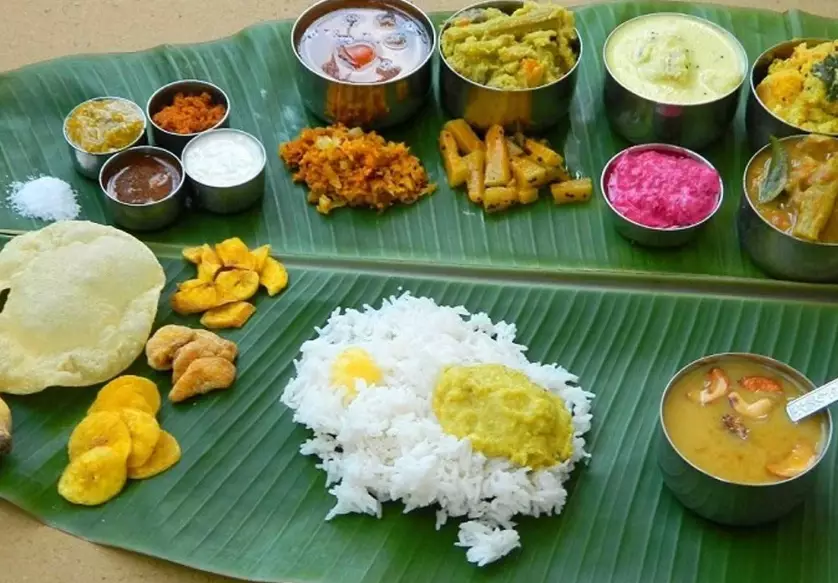
Discussion