Let's clear something up right away. Calling Indian breads a "side dish" is like calling rice in Japan an afterthought. It's foundational. For countless meals across the subcontinent, the bread is the utensil, the flavor carrier, the satisfying bulk that turns a curry into a complete experience. If you've only ever had naan from a takeout menu, you're missing a universe of texture, technique, and taste. Based on my years exploring kitchens from Delhi to Chennai, here are the five Indian flatbreads that truly define the culinary landscape.
Your Quick Guide to Indian Breads
The Five Pillars of Indian Bread
Before we dive into each one, here's a snapshot. This isn't just a list; it's a map of textures and occasions.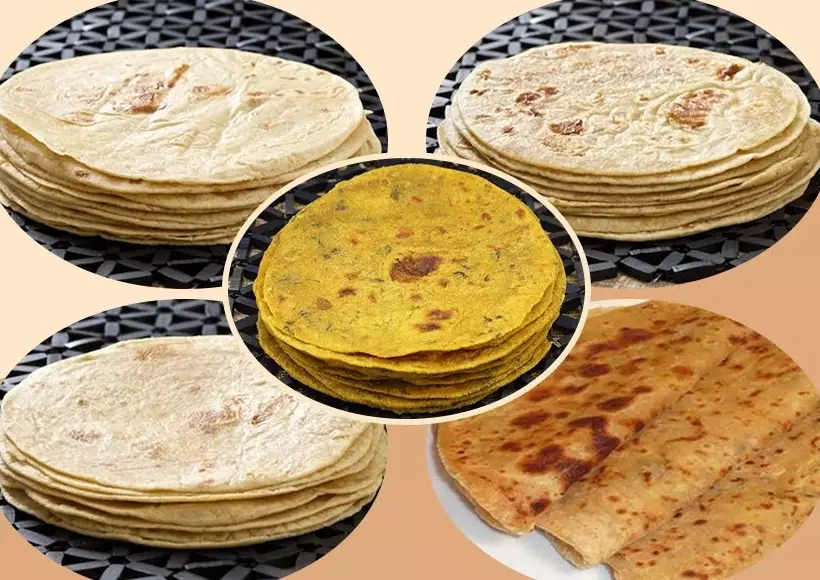
| Bread | Key Characteristic | Typical Companion | Occasion |
|---|---|---|---|
| Naan | Leavened, soft, chewy, tandoor-cooked | Rich curries (Butter Chicken, Rogan Josh) | Restaurant dining, feasts |
| Roti/Chapati | Unleavened, thin, soft, whole wheat | Daily dals, sabzis (vegetable dishes) | Everyday home meal |
| Paratha | Layered, flaky, pan-fried (often stuffed) | Yogurt, pickles, simple curries | Breakfast, brunch, travel food |
| Puri | Deep-fried, puffed, light & crispy | Potato curry (Aloo Bhaji), chickpea curry | Festivals, street food, special breakfast |
| Kulcha | Leavened, soft, slightly denser than naan | Chole (spicy chickpea curry) | North Indian street food specialty |
See the variety? From the everyday to the festive, there's a bread engineered for the job.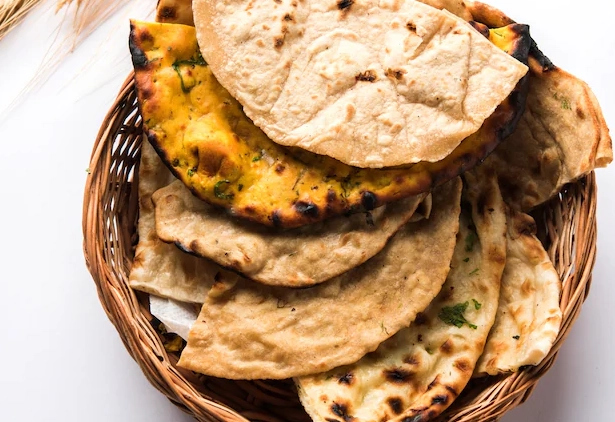
What Exactly is Naan?
This is the one most outsiders know. Naan is the leavened, tearable bread from the tandoor. The dough uses yogurt or sometimes yeast, which gives it that distinctive soft, slightly chewy interior. The high heat of the clay oven creates those beautiful charred bubbles and a subtle smokiness.
But here's a tip most recipes won't tell you: a great naan shouldn't be greasy. Some places slather on butter to hide a dry, overcooked base. A perfectly cooked naan from a proper tandoor is moist and pliable enough on its own; the butter on top is a flavor enhancer, not a moisture crutch.
Where you'll find it: Primarily in North Indian restaurants (Mughlai, Punjabi). You'll see it plain, buttered, or stuffed with garlic (Garlic Naan), minced meat (Keema Naan), or even paneer and nuts. It's not typically a daily home bread because most households don't have a tandoor.
How is Roti Different from Naan?
This is the most common point of confusion. While naan is a treat, roti (or chapati) is the workhorse. It's made from a simple dough of whole wheat flour (called atta) and water. No leavening. It's rolled thin and cooked on a flat griddle called a tawa. The result is softer, thinner, and more pliable than naan—perfect for scooping up food.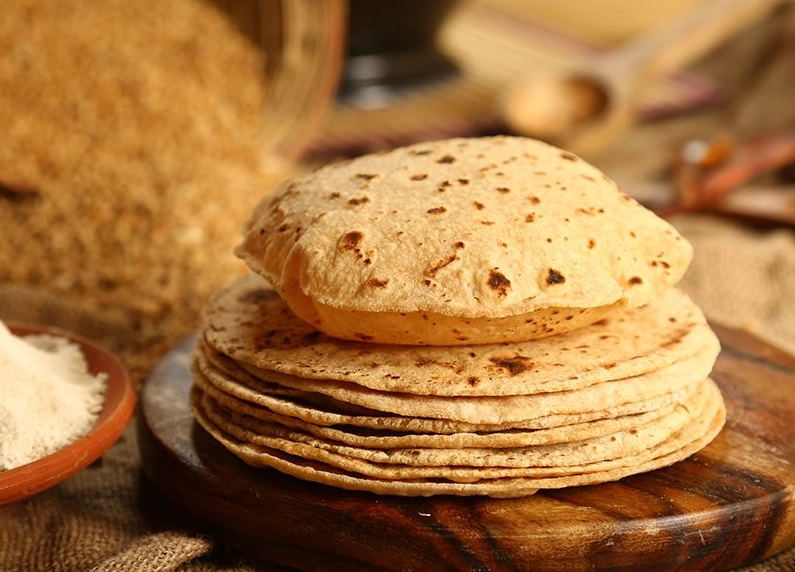
Roti & Chapati: The Daily Staples
If you eat in an Indian home, this is what you'll get. The terms are often used interchangeably, though some argue chapati is the basic version, while roti might be cooked briefly over an open flame at the end to make it puff up. The goal is a soft, supple bread that's warm and comforting.
Making a perfectly round, soft roti is a skill Indian home cooks pride themselves on. The common mistake beginners make? Not kneading the dough long enough. It needs to be soft and pliable, resting for at least 20 minutes, or the rotis will be tough. Another secret: a drop of oil or ghee in the dough works wonders for texture.
It's the ultimate vehicle for dal (lentil soup) or a dry-spiced potato dish (aloo ki sabzi). You tear off a piece, use it to grab a bite, and the meal just feels complete.
Flaky, Buttery Paratha
Paratha is where things get decadent. Imagine a flatbread with layers, like a rough puff pastry. The dough is rolled, brushed with ghee or oil, folded, and rolled again—multiple times. Then it's pan-fried until golden and flaky.
They can be plain (lachha paratha), but the magic happens when they're stuffed. The most famous is Aloo Paratha—stuffed with a spiced mashed potato mixture. But you also find them with grated cauliflower (gobi), radish (mooli), or even minced lamb.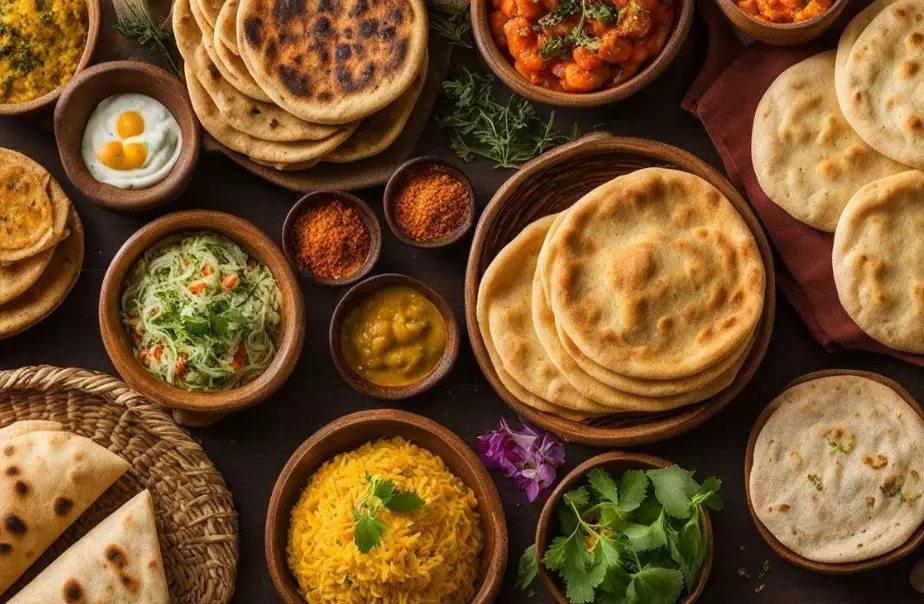
This is a common breakfast or travel food. It's substantial, doesn't need a wet curry, and tastes great with just a blob of yogurt and some mango pickle.
The Puffed Wonder: Puri
Puri is the festive, fun bread. It's made from a simple wheat dough, rolled into small circles, and then dropped into hot oil. If the oil is at the right temperature, the puri puffs up into a perfect, golden ball. It's light, crispy, and delightfully airy inside.
The first time I saw a street vendor make them, I was mesmerized. He'd slap the dough into the oil, and with a few quick presses of his slotted spoon, it would balloon up in seconds. Eating one fresh is a treat—you break the crispy shell to reveal the soft interior.
It's traditionally paired with a semi-dry potato curry (Aloo Bhaji) or a chickpea curry (Chole). You break off a piece of the puri, use it to scoop up the curry, and the mix of textures is incredible. It's a Sunday breakfast favorite or a must-have during festivals like Holi and Diwali.
A word of caution: puris don't keep. They deflate and become leathery when cold. They're meant to be eaten immediately.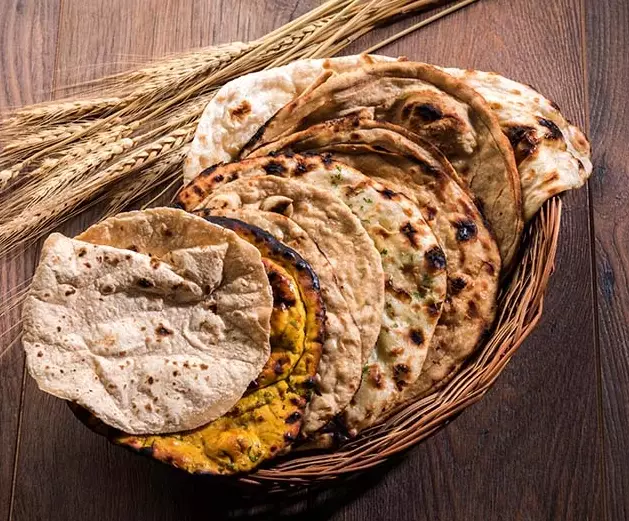
Kulcha: Naan's Close Cousin
Kulcha is Amritsar's gift to the bread world. Often confused with naan, it's a leavened bread but typically made with baking powder or baking soda instead of yeast, resulting in a slightly denser, more uniform crumb without the large air pockets of naan. It's also cooked in a tandoor.
Its claim to fame is the partnership with Chole (spicy, tangy chickpea curry). The combination, Chole Kulche, is a iconic street food dish from North India, especially Delhi and Amritsar. The kulcha is sometimes stuffed with mashed potatoes or onions and cilantro.
The flavor is more straightforward than naan—less buttery, more bread-focused, which makes it the perfect sponge for the robust, spicy chole gravy.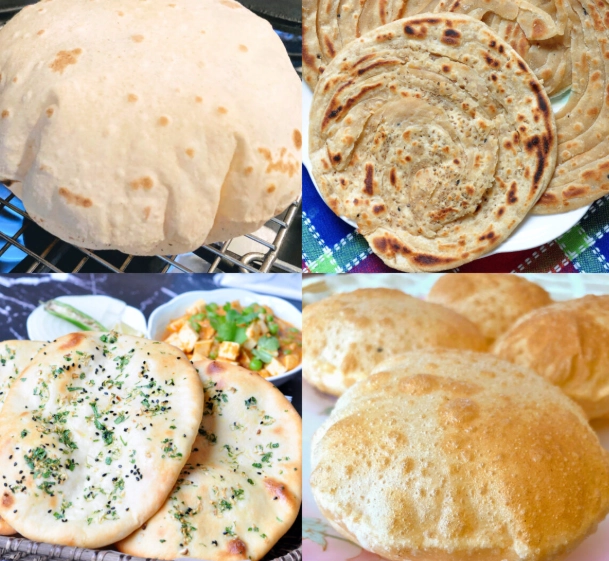
How to Choose the Right Bread for Your Meal
Think of it as matching intensity.
Having a heavy, creamy Butter Chicken or a rich Dal Makhani? You need a sturdy, leavened bread like naan or kulcha to stand up to it and mop up the sauce.
For everyday lentils (dal tadka) or dryish spiced vegetables (bhindi masala), the soft, neutral roti is perfect. It doesn't compete.
Paratha is a meal in itself, especially when stuffed. Pair it with something light like yogurt or a simple lentil soup.
And puri? Save it for a special weekend brunch or when you want that crispy, celebratory feel.
According to resources like the Ministry of Culture's portal, the diversity of Indian breads reflects the regional agricultural produce, from wheat in the north to millets and rice flours in the south and east.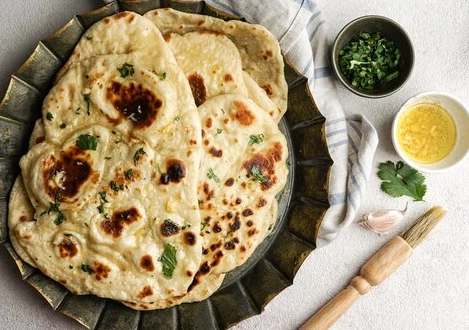
Your Indian Bread Questions Answered
So, next time you order Indian food or try making it at home, move beyond just naan. Ask for a basket with roti and paratha. Try making puri for a special breakfast. Each bread offers a different window into how India eats—from the daily ritual of the roti to the joyful puff of a festival puri. It's not just bread; it's a fundamental part of the story.
Discussion